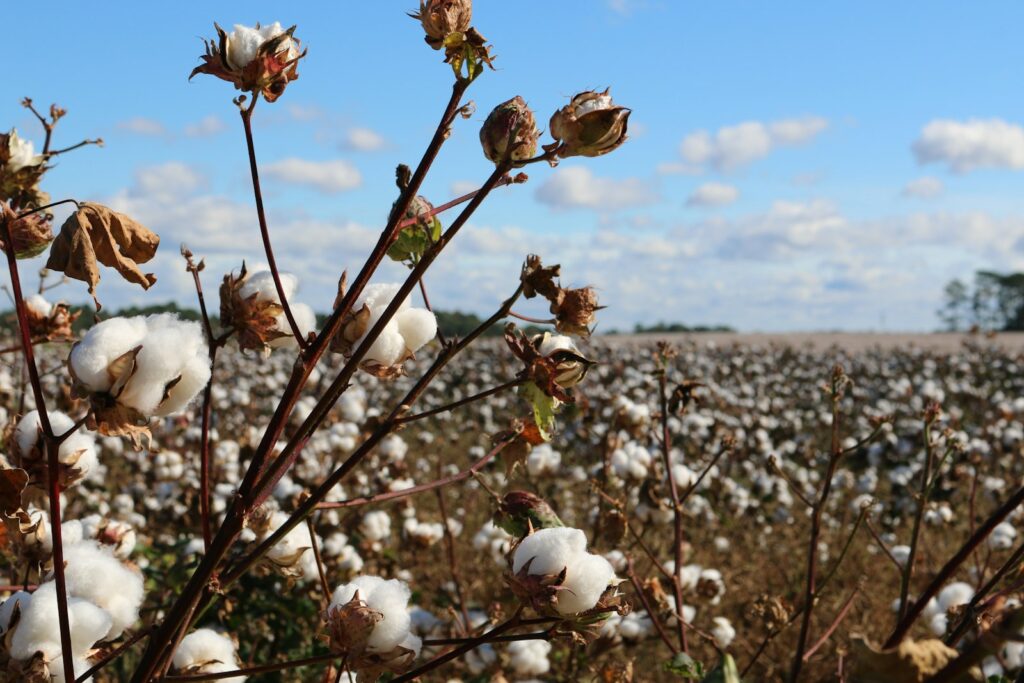
August is the make-or-break month for cotton in Punjab and Sindh. The crop is squaring and setting bolls, sucking pest pressure is at its peak, and how you manage both determines what’s left to pick in September. Here’s what matters right now.
Why August Is the Critical Month for Cotton
By August, cotton planted from MR-2, FH-1148, ASAD-2 or CYTO-23 seed is moving through squaring into boll formation — the stage that sets your final yield. It’s also peak season for jassid (green leafhopper) and whitefly, both of which spike in the hot, humid conditions of late summer and can undo a season’s investment in weeks if left unchecked.
Jassid & Whitefly: What to Watch For
- Jassid damage shows up as yellowing and downward curling (“cupping”) of leaf edges, followed by a reddish-bronze scorch on badly affected leaves. Check the undersides of leaves in the cooler morning hours, when both pests are easiest to spot.
- Whitefly clusters on the underside of leaves and, beyond direct feeding damage, spreads Cotton Leaf Curl Virus (CLCV) — a bigger long-term threat to yield than the feeding itself.
- Scout weekly, not occasionally. Populations can build fast in August heat; regular field checks catch outbreaks before they spread across the block.
- Favour resistant/tolerant varieties, balanced nitrogen (avoid excess), and preserve natural predators where possible — these all reduce how hard chemical control has to work.
For a spray programme suited to your specific infestation level and region, we recommend consulting a local agronomist or your provincial agriculture extension office, since chemical control timing and choice depend heavily on scouting counts and resistance status in your area.
Supporting the Crop Through Boll Formation
Pest pressure isn’t the only demand on the plant in August — boll formation is also when cotton needs its nutrition programme to hold up. A few things worth pairing:
- Docker (humic acid + K₂O soil conditioner) helps roots keep working through Punjab’s intensively cropped, often tired soils, supporting the uptake the plant needs during peak boll load.
- Lexa (chelated liquid potash, K₂O 30%) is worth considering during boll filling — potash plays a direct role in boll and fibre development and in the plant’s general disease resistance.
- Montit (amino acid crop supplement) can help the plant recover from the combined stress of pest pressure, heat and heavy fruiting load, keeping growth steady through a demanding stretch of the season.
Choosing Cotton Seed That Starts You Off Right
Pest and nutrition management can only do so much if the seed underneath is weak. Lashkar Seeds supplies four certified cotton varieties for Punjab and Sindh:
- MR-2 and FH-1148 — widely grown, dependable performers across standard Punjab conditions.
- ASAD-2 and CYTO-23 — bred with an emphasis on disease tolerance and strong boll production.
All four are supplied with strong germination and disease tolerance as standard, which gives the crop a better starting position to withstand August’s pest and heat pressure in the first place.
Get Current Availability & Pricing
Cotton input pricing moves with the season and region, so we don’t publish a fixed number here. Message us on WhatsApp for today’s rates on MR-2, FH-1148, ASAD-2 or CYTO-23 seed, or on Docker, Lexa and Montit for your boll-stage nutrition plan — we typically reply within the hour with current and bulk/dealer pricing.
Buy Certified Cotton Seed From Faisalabad
Lashkar Seeds has supplied certified seed and crop inputs across Punjab and Sindh for over 20 years. For current cotton seed availability and nutrition product pricing, message our team on WhatsApp — we’ll get you today’s numbers directly, no guesswork.
اگست میں کپاس کی دیکھ بھال — جیسڈ، سفید مکھی اور ٹینڈے
اگست کپاس میں ٹینڈے بننے اور رس چوسنے والے کیڑوں کے دباؤ کا اہم وقت ہے۔ جیسڈ اور سفید مکھی کے لیے پتوں کی نچلی سطح سمیت پورے کھیت کا باقاعدہ معائنہ کریں۔ صرف کھیت کے کنارے دیکھ کر فیصلہ نہ کریں اور فائدہ مند کیڑوں کو بھی مدِنظر رکھیں۔
کھاد، آبپاشی اور کیڑے مار دوا کا فیصلہ فصل کی حقیقی حالت اور مقامی زرعی سفارش کے مطابق کریں۔ غیر ضروری نائٹروجن یا اندھا دھند سپرے فصل اور مفید حشرات دونوں کو متاثر کر سکتا ہے۔